
/ Stone Collection / Onyx and Alabaster
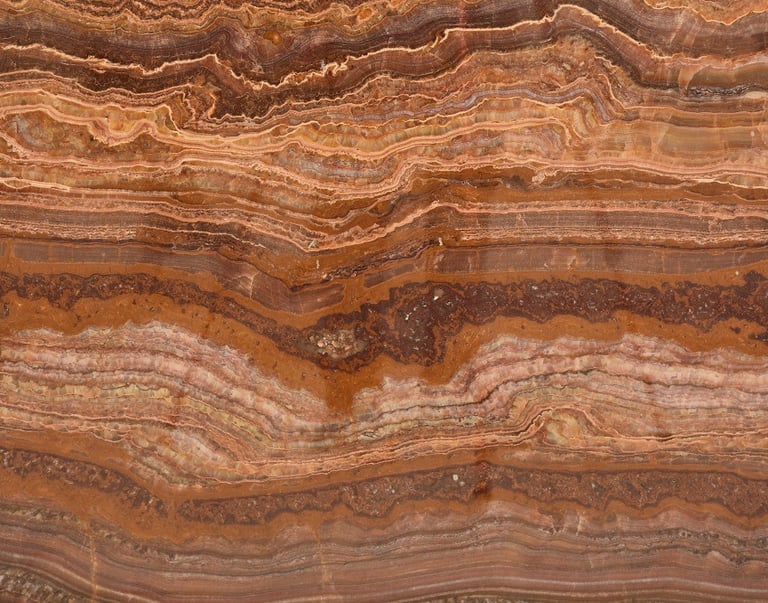
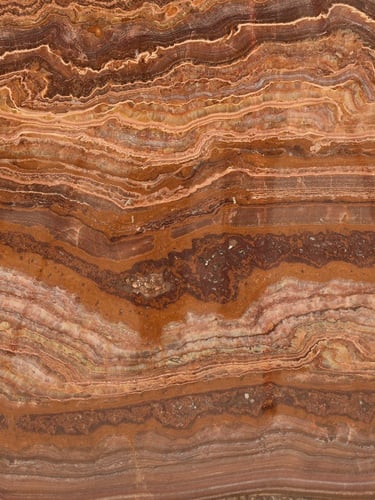
Onyx is a striking natural stone known for its translucent quality and dramatic banded patterns formed by layers of mineral deposits. It typically appears in a range of colors such as white, green, honey, and deep brown, often glowing beautifully when backlit, which makes it especially popular in luxury design. Commonly used for feature walls, countertops, decorative panels, and artistic installations, onyx brings a sense of elegance, exclusivity, and visual drama to interior spaces.
Onyx
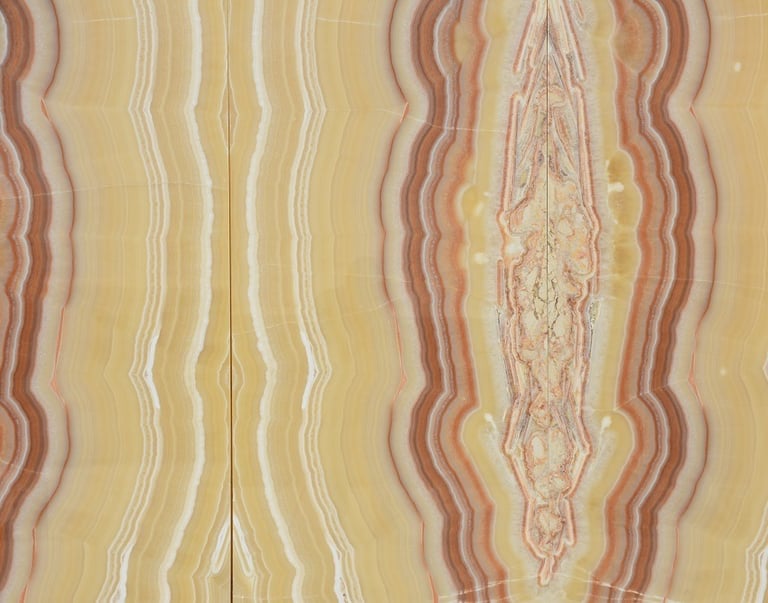
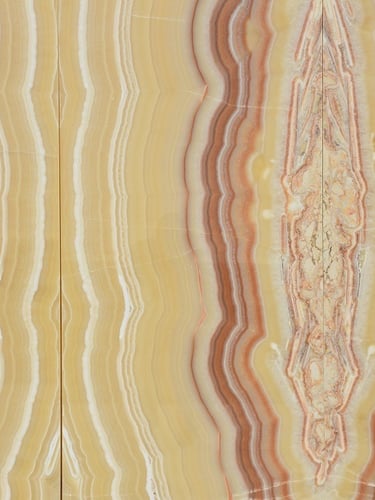
Alabaster
Alabaster is a soft, translucent natural stone formed from fine-grained gypsum or calcite, valued for its smooth texture and gentle, glowing appearance. It is typically found in creamy white, beige, honey, and light amber tones, often allowing light to pass through in a warm and elegant way. Because of its delicate beauty, alabaster is commonly used for decorative objects, sculptures, lighting features, and interior accents rather than heavy structural applications. Its timeless, refined look makes it a favored material for creating soft, luxurious atmospheres in interior design.
Acid Resistance
Limestone: none — etches on contact with mild acids. Quartzite: high — silica matrix does not react. Slate: moderate — depends on mineral composition; test before specifying in kitchens.
Sealing Requirements
Three stones. Three different answers to the same installation question.
Limestone seals annually and still shows patina. Quartzite with verified density seals once or not at all. Slate seals on honed faces; cleft faces are typically left natural.
Floor vs. Wall Performance
Quartzite handles both. Limestone floors require low-traffic or honed finish with regular maintenance. Slate on floors needs a cleft or textured face; the smooth face is a slip risk when wet.
See the variance before you specify.
Sample slabs ship within one business day. Each arrives labeled with material type, verified hardness, and finish so you know exactly what you are looking at.
stonexport.com
Stone named, rated, and stocked honestly.
Reach us
yismail@stonexport.com
wwehbe@stonexport.com
+201005263949
Sample requests fulfilled within three business days
(C) 2026 Sstoenxport.com -Stocking stone for people who read the spec sheet.
Material honesty. No exceptions.